

Interprofessional Education (IPE)

UDM's College of Health Professions is launching a program that aims to improve health through interprofessional education (IPE). Aligned with the University's Jesuit and Mercy values (see below), IPE is a teaching method that involves students from different professions learning together to improve collaboration and patient care outcomes.
IPE Mission
The mission of UDM's IPE program is to prepare current and future healthcare professionals through education and practice in values and ethics, roles and responsibilities for collaborative practice, interprofessional communication, and teamwork and team-based care to provide optimal person- and population-centered care.
Program Goals
Participants who have successfully completed IPE programming at UDM should be able to:
- Demonstrate the knowledge and skills necessary for future practice on a patient/client-centered interprofessional healthcare team.
- Demonstrate mutual understanding and respect for the roles, responsibilities, and scope of practice of one’s own profession and of other healthcare professions.
- Utilize communication and collaboration skills responsively and responsibly that support a team approach.
- Apply the interprofessional education collaborative IPEC core competencies in various healthcare situations or settings.
- Develop team building and leadership behaviors consistent with UDM University’s Mission and Values.
- Analyze different roles and expertise within the healthcare field and recognize how individual uniqueness, together with a multidisciplinary approach (within the healthcare team), contributes to efficient conflict resolution and outstanding patient care.
Homecoming IPE Resource Fair: Sept. 26
IPEC Activity: Community Resource Fair: One University, Many Professions to Strengthen Our Community
The Interprofessional Education Collaborative (IPEC) Community Resource Fair is an engaging event that connects community members with a diverse range of professionals and services. This fair promotes community engagement by showcasing the expertise, resources and services of UDM professions.
Attendees will have the opportunity to participate in hands-on activities across disciplines with professionals and learners from different colleges. This collaborative environment highlights the value of interprofessional teamwork in addressing complex societal challenges and enhancing overall community well-being.
Moreover, the fair will provide a platform for professionals to explain their roles, scopes of practice and contributions in addressing societal challenges. Join us for an informative and interactive experience that fosters connections and empowers our community through knowledge and collaboration.
United in Crisis: An Interprofessional Mass Casualty Simulation
Students will serve as simulated patients or “victims” during the scenario, portraying individuals with varying injuries, medical conditions and levels of acuity. This role allows students to experience the emergency response from the patient perspective while observing how healthcare and emergency response teams communicate, prioritize care and work together.
The exercise provides students with an opportunity to observe and participate in a large-scale emergency response involving fire departments, EMS agencies, law enforcement, hospitals, emergency management and other community partners. Students will experience the coordination required during a mass-casualty event, including triage, patient assessment, treatment, transport, communication and resource management.
The experience also exposes students to the roles and responsibilities of different emergency response professionals and demonstrates the importance of interprofessional collaboration, communication, leadership, situational awareness and coordinated decision-making during large-scale emergencies.
Understanding Interprofessional Education and Collaborative Care
What is IPE?
Interprofessional education occurs when students from two or more professions learn about, from, and with each other to enable effective collaboration and improve health outcomes.*
Collaborative practice & teamwork
Health workers from different professional backgrounds work together with patients, families, caregivers and communities to deliver the highest quality care. This includes the cooperation, coordination, and collaboration needed for patient-centered care across settings.*
Team-based care
Care delivered by intentionally created, usually relatively small work groups in heath care who are recognized by others as having a collective identity and shared responsibility for a patient or group of patients (e.g., rapid response team, palliative care team, primary care team, and operative room team).*
Competencies
A person's abilities to integrate knowledge, (or competencies) skills, and attitudes in their performance of tasks in a given context. Competencies are durable, trainable, and, through the expression of behaviors, measurable.*
Core competencies of IPE
The core competencies described by the Interprofessional Education Collaborative (IPEC) are pivotal in UDM's IPE program, including
- values and ethics,
- roles and responsibilities,
- communication and
- teams and teamwork.
Learners can practice these core competencies across healthcare clinical scenarios, preparing them for successful collaboration, team-building skills and leadership behaviors.
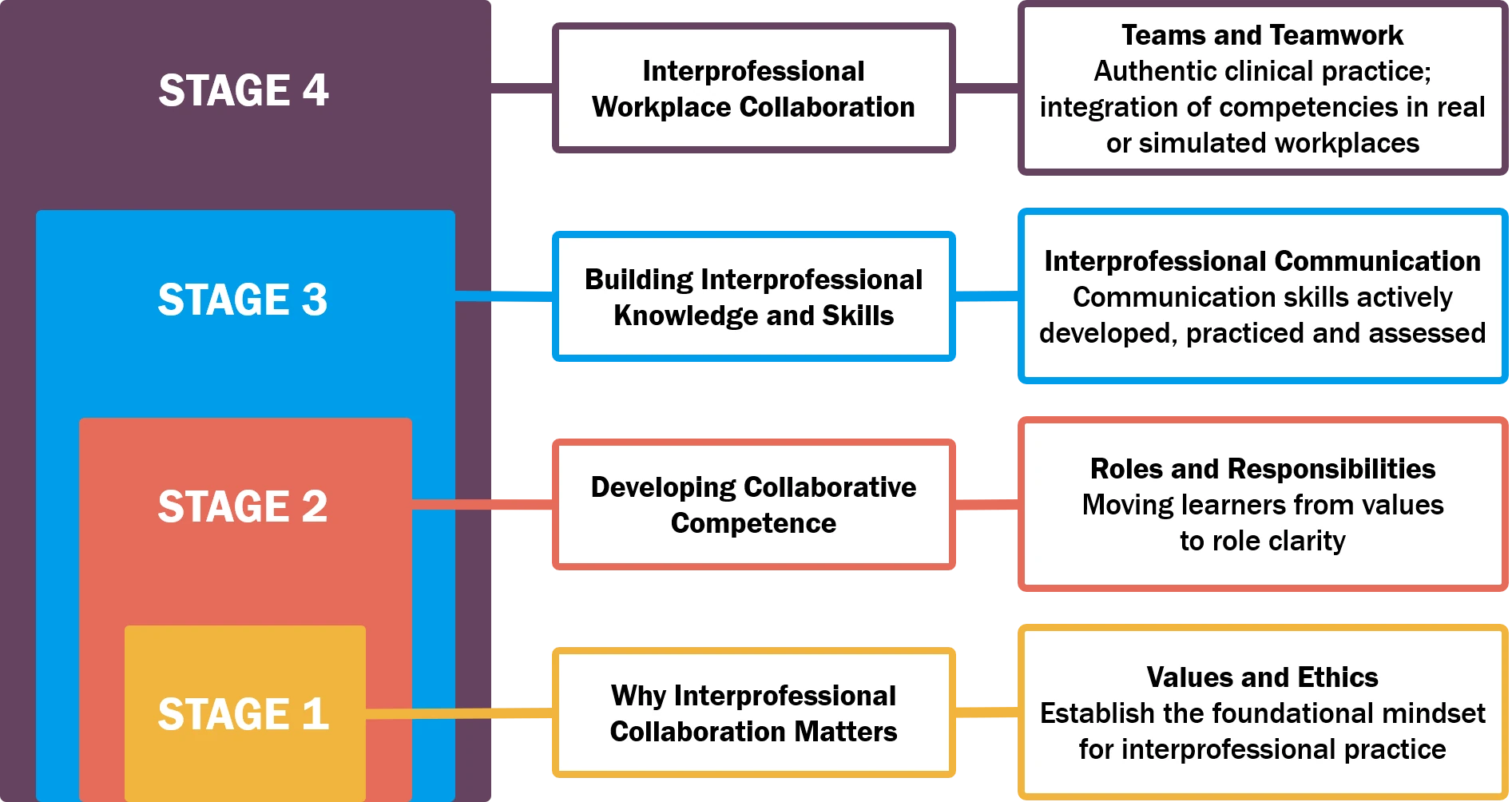
By emphasizing the IPEC core competencies, courses will enhance participants' ability to provide exceptional care and contribute to improving patient outcomes.
More about IPE at UDM
-
Who can enroll in IPE courses?
UDM students, healthcare professionals, hospital and community clinic staff, alumni from various health-related professions, leaders from local health systems and faculty from different disciplines that incorporate well-being into their curriculum.
-
How IPE fulfills UDM's mission
The proposed IPE program effectively supports the mission of the University of Detroit Mercy by providing a holistic, student-centered education that integrates intellectual, spiritual, ethical and social development in an urban context. The program embodies the core values of the university's Jesuit and Mercy traditions by preparing students to be compassionate and competent health professionals committed to social justice and community engagement:
Student-Centered Education: The IPE program focuses on learner engagement and active learning. By encouraging collaboration among learners from different health professions, the program ensures that education is personalized and relevant to the real-world contexts in which students will practice. This approach fosters a learning environment where learners feel valued and empowered to contribute.
Integration of Intellectual and Ethical Development: The IPE program enhances students’ intellectual development by providing them with interdisciplinary knowledge and skills necessary for effective collaboration in healthcare settings. Ethical considerations will be integral to the curriculum, prompting learners to reflect on their responsibilities as future health professionals and to engage deeply with ethical dilemmas in patient care.
Spiritual Development: Rooted in the Jesuit and Mercy traditions, the IPE program encourages students to understand holistic healthcare, which respects not only the physical health of individuals but also their emotional and spiritual needs. By fostering a compassionate approach to care, the program helps learners grow as individuals who recognize the importance of the spiritual dimensions of health and well-being.
Social Development through Urban Context: The IPE program emphasizes the importance of community engagement and service within Detroit's urban environment. Through partnerships with local organizations and healthcare facilities, learners will gain practical experience working with diverse populations, allowing them to apply their learning in socially relevant ways. This focus prepares students to respond to urban communities' unique challenges.
Advocacy for Social Justice: The program will address health equity issues and access to care, grounding students in advocating for marginalized populations. This advocacy aligns with UDM's mission to promote social justice and encourages learners to become leaders in addressing systemic issues in healthcare.
Collaborative Learning Environment: The IPE program fosters a cooperative atmosphere that mirrors the university’s commitment to community and cooperation. By working together, learners will appreciate different perspectives, which enhances their communication skills and prepares them to function effectively in diverse teams.
Preparing Graduates for Global Citizenship: While focusing on local urban issues, the IPE program also prepares learners to recognize healthcare trends and challenges on a global scale. This broader perspective is essential for fostering responsible and informed global citizens in an increasingly interconnected world.
-
IPE resources and professional development
National Center for IPE
The National Center for Interprofessional Practice and Education introduced the concept of “interprofessional practice and education”, or the “new” IPE as a conceptual bridge between interprofessional education and collaborative practice, emphasizing practice and community settings to align IPE with health systems redesign, focused on Triple Aim (now Quadruple Aim) outcomes. The National Center provides a hub for measurement tools for evaluating individuals, teams or work environments, as well as assessing the impact of interprofessional education and collaborative practices.
IPEC
The Interprofessional Education Collaborative (IPEC) represents 21 national health professions associations working to promote member IPE efforts to help prepare future health professionals for enhanced team-based care of patients and improved population health outcomes. These organizations – which represent higher education in allopathic and osteopathic medicine, dentistry, nursing, pharmacy and public health – created core competencies for interprofessional collaborative practice to guide curricula development across health professions schools. See IPEC's archive of webinars.
AIHC
The American Interprofessional Health Collaborative (AIHC) is the professional community of the National Center for IPE mentioned above. AIHC is open to people who are interested in transforming health in the United States through interprofessional collaboration. AIHC creates opportunities for colleagues to come together, learn and grow.
TeamSTEPPS
The Agency for Healthcare Research and Quality (within the U.S. Dept. of Health and Human Services) has developed TeamSTEPPS, short for Team Strategies & Tools to Enhance Performance and Patient Safety. The TeamSTEPPS framework provides an evidence-based set of teamwork tools, aimed at optimizing patient outcomes by improving communication and teamwork skills among healthcare teams, including patients and family caregivers. It requires clearly defined and appropriate team structure and the use of four teachable-learnable skills: communication, team leadership, situation monitoring and mutual support. Among its resources are welcome guides, training videos, a pocket guide and curriculum materials.
Earn a Digital Badge
A digital badge is an innovative credential that showcases skills acquired through various learning experiences. It is represented as a clickable icon that provides detailed information, including the institution that awarded it, the achievement date, the criteria for obtaining the badge, and supporting evidence demonstrating that you have fulfilled those requirements. After earning a digital badge, you can easily share it on social media platforms like LinkedIn, include it as a hyperlink on your resume, and incorporate it into your e-portfolio and email signature.
IPE in a global context
International IPE: interprofessional collaboration overseas
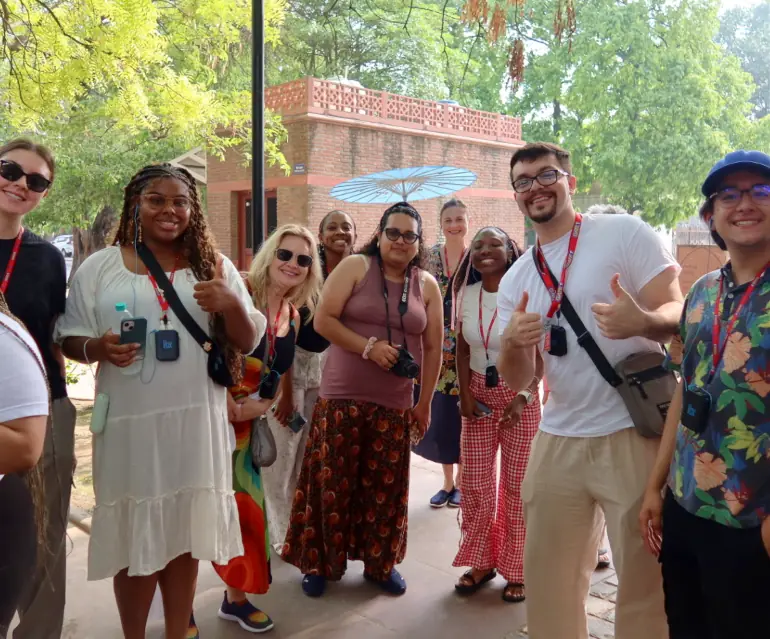
Detroit Mercy plans to offer collaborative study-abroad experiences that include interprofessional education. Watch this page for more information as it develops.
International IPE programs are open to students across all UDM colleges and disciplines. They are designed to promote learning with, from, and about others in a global context.
For information about UDM international IPE, refer to the following:
- General questions about international experiences: UDM's Study Abroad FAQ page
- Specific questions about international IPE programs: see below
International IPE questions
-
Who is eligible for international IPE?
All University of Detroit Mercy learners in good academic and professional standing are eligible to apply for an international interprofessional education collaborative experience. Programs are open to students across colleges and disciplines. -
I'm not a student. Can I participate in an IPE immersive abroad experience?
- Many faculty-led short-term international experiences welcome non-Detroit Mercy participants age 18 and over. No minor children may participate.
- Alumni and students from other universities are subject to the same program fees, policies, accommodations and itineraries.
- Non-Detroit Mercy participants may be required to enroll in academic credit, attend all orientations and meet all program expectations. Visiting students should consult their home institution regarding financial aid eligibility.
-
Can I participate if I am not a student in the College of Health Professions?
International IPE experiences are intentionally interprofessional and interdisciplinary. Students from nursing, health sciences, engineering, architecture, business, law, education, liberal arts, sciences, optometry, dentistry and other academic areas may participate, depending on the focus of each program.
-
Is there a registration deadline for the international IPE immersive?
Yes. Each international IPE immersive experience has a registration deadline to allow time for travel planning, preparation and university approvals. Deadlines are posted with each program destination.
-
What else do I need to know about study abroad?
This page is specific to international interprofessional education (IPE). Be sure to also refer to other important information about immersive international experiences on the UDM Study Abroad FAQ page. Topics include passports, accommodations, financial aid, vaccinations, etc.
You may also wish to visit the UDM Study Abroad home page.
UDM IPE Advisory Board

Nina
Favor
Director of Simulation and IPE
313-578-0444
favornf@udmercy.edu

Gregory
Grobis
Associate Dean, CHASS
Associate Professor of Performing Arts
313-993-1464
grobisgj@udmercy.edu

Naureen
Haroon
Associate Dean of Academic Administration
haroonnm@udmercy.edu

Andrea
Kwasky
Professor
313-993-2448
kwaskyan@udmercy.edu

Melanie
Mayberry
Clinical Professor
Division Director, Practice Essentials and Interprofessional Education
313-494-6785
mayberme@udmercy.edu

Noah
Resnick
Associate Dean, School of Architecture & Community Development
Professor of Architecture & Community Development
313-993-1531
resnicns@udmercy.edu

Mary
Serowoky
Clinical Associate Professor
313-993-1935
serowoml2@udmercy.edu

Lara
Wasner
Director of Language and Cultural Training
Study Abroad Coordinator
Fulbright Scholar Liaison
Adjunct Professor
313-993-1191
wasnerle@udmercy.edu

Oliver
Zhao
Simulation Lab Technician
313-993-3392
zhaooy@udmercy.edu