

Physician Assistant (PA) Program

Why are PAs in such high demand?
As the physician shortage intensifies, physician assistants (PAs) will provide a critical role in meeting the primary care needs of an aging population in the United States. The PA profession is one of today's fastest growing health care fields, and University of Detroit Mercy's Physician Assistant Program has been educating PAs for over half a century.
Physician assistants – also known as physician associates – are licensed to practice medicine with physician collaboration. Trained mainly in primary care, PAs conduct physical exams, diagnose and treat illnesses, order and interpret tests, counsel on preventive health care, assist in surgery and may also write prescriptions. PAs practice in family medicine, internal medicine, pediatrics, obstetrics/gynecology and surgery. They may also work in specialty fields such as cardiovascular surgery, orthopedics and emergency medicine.
Detroit Mercy PA graduates go on to work in all areas of medicine and many can be found in leadership position in most of the major health systems in the metro Detroit area. Several of our graduates have continued their education in selective post graduate residencies. Find out more about the PA profession at the American Academy of Physician Associates (AAPA) website.


Earn your PA master's degree at UDM
The PA Program offers two-year and three-year tracks for graduate students to earn the Master of Science degree with a major in Physician Assistant. The University also offers undergraduate students pathways to pursue a PA education. Expand the sections below for more on your path options.
-
Graduate students
For graduate students to earn a Master of Science degree with a major in Physician Assistant, the PA Program offers both a traditional two-year graduate program as well as a three-year program for people already busy with their career.
Two-year program (full-time)
In the first year of the two-year graduate program, you will engage in didactic coursework in the medical sciences and related educational experiences. Classes are scheduled in summer sessions as well as regular fall and winter semesters.
During your second year, you'll acquire clinical expertise through a broad range of intensive clinical rotations, community health education and health projects with medically underserved communities. Clinical work is scheduled in summer sessions as well as in the regular fall and winter semesters.
You will complete your course of study with a preceptorship in primary care medicine.
Three-year program (part-time)
A three-year course of study is also available, designed for working professionals. Graduate students in this track divide the didactic coursework over a two-year period rather than one. The clinical year is then completed in the same manner as the traditional two-year program.
-
Undergraduate students
While the PA Program itself is for graduate students, University of Detroit Mercy also offers undergraduate pathways toward the PA master's degree.
- Pre-PA program – The Pre-PA program path is for current UDM undergraduate students in any major and it prepares you to enter the Physician Assistant graduate program. When you earn your bachelor's degree, if you meet the criteria at the time of application to the graduate PA program, you'll be guaranteed an interview with the PA admissions committee. This is special consideration for Detroit Mercy Pre-PA graduates only. See the Pre-PA page for details and contact information.
- Accelerated Five-Year Program – Detroit Mercy was the first to offer a five-year, entry-level master's degree PA program in Michigan. "Entry-level" means that you enter the University as a freshman and five years later you graduate with both a Bachelor of Science in Biology and a Master of Science in Physician Assistant. Learn more about the Five-Year PA Program.
For curriculum and other program details, see the official PA Program listing in the academic catalog.
The Detroit Mercy PA Program meets educational requirements for you to practice in Michigan. For more licensure information, refer to the state's Bureau of Professional Licensing.
Note: The University has not made a determination of whether Detroit Mercy curriculum meets PA requirements for any other state. Students intending to practice elsewhere should check PA education, practice and certification requirements with each state's licensing board.
Excellent PANCE certification rates
The Detroit Mercy PA Program qualifies you to take the Physician Assistant National Certification Examination (PANCE), and our PA graduates have excellent PANCE certification rates.
See the outstanding Detroit Mercy PA results in a recent PANCE performance report (PDF).
Accredited since 1972
Our program is fully accredited by the Accreditation Review Commission on Education for the Physician Assistant (ARC-PA) and has been continuously accredited since 1972. We are a member of the Association of Physician Assistant Programs and host an AAPA student chapter.
See below for more ARC-PA accreditation details.
A glimpse of the program

-
Accreditation status with ARC-PA
The Accreditation Review Commission on Education for the Physician Assistant, Inc. (ARC-PA) has granted Accreditation-Continued status to the University of Detroit Mercy Physician Assistant Program sponsored by the University of Detroit Mercy. Accreditation-Continued is an accreditation status granted when a currently accredited program is in compliance with the ARC-PA Standards.
Accreditation remains in effect until the program closes or withdraws from the accreditation process or until accreditation is withdrawn for failure to comply with the Standards. The approximate date for the next validation review of the program by the ARC-PA will be April 2029. The review date is contingent upon continued compliance with the Accreditation Standards and ARC-PA policy.
The program’s accreditation history can be viewed on the ARC-PA website.
-
Diversity and inclusion
The University of Detroit Mercy PA program is committed to promoting and supporting diversity among our student body. Our mission compels us to ensure that no one is denied access to a Detroit Mercy education based on their gender, race, religion, national origin or economic status. The composition of our student body reflects this commitment. Advancing diversity, equity, and inclusion supports our campus goals for diversifying the faculty and creating an inclusive campus climate for all individuals.
A Detroit Mercy education seeks to integrate the intellectual, spiritual, ethical and social development of our students. A diverse student body enriches PA education by increasing diverse perspectives that enhance new knowledge and promote opportunities to learn from others with a broad range of backgrounds and experiences. The University of Detroit Mercy PA Program is committed to recruiting students of diverse backgrounds through recruitment, admissions, and support programs that support diversity, fostering the development of competent PAs of the next generation.
-
Tuition and costs
Your costs for the PA Program include tuition and other expenses.
To get your total tuition estimate, use the formulas below with the current tuition rates published on the Student Accounting page. On that page, the Physician Assistant (PA) costs are listed under Graduate Tuition & Fees > Physician Assistant.
Two-year program (full-time) tuition
Multiply the listed PA full-time flat rate by six semesters:
[PA full-time flat rate] x 6 = total tuition estimate
Three-year program (part-time) tuition
Multiply the listed PA part-time flat rate by nine semesters:
[PA part-time flat rate] x 9 = total tuition estimate
Non-tuition costs
In addition to tuition, other PA Program expenses include:
- books and medical equipment
- local travel to clinical sites
- course and certification exam fees
Related links
- PA Program expenses are discussed in our information meetings.
- Detroit Mercy offers financial aid which assists many students in covering the cost of their education.
- See the University's refund policy.
-
Curriculum
Courses needed to earn the PA master's degree are listed under degree requirements on the PA Program's academic catalog page. The catalog page also provides links to course descriptions. -
Clinical locations
Below is a sample of the clinical sites that provide educational opportunities for Detroit Mercy PA students:
- Corewell Health
- Ascension
- Detroit Medical Center
- Henry Ford Health System
- Hurley Medical Center
- McLaren Regional Medical Center
- Trinity Health
- Veteran's Affairs Medical Centers
- Allegiance Health
- University of Michigan Health System
...and many clinics, HMOs and offices in southeast Michigan and throughout the state.
-
Program goals and outcomes
The PA Program Goals & Outcomes page describes the overall administrative mission, vision, goals and outcomes for the Physician Assistant Program at University of Detroit Mercy, and provides metrics for each learning outcome for recent years. -
William Beaumont Society for PA students
When you accept a spot in the Detroit Mercy PA Program, you automatically become a member of the WIlliam Beaumont Society. Members enjoy social events and a graduation party organized by the Society's board. You are also provided opportunities to volunteer in the community and make meaningful connections with those around you.
According to the William Beaumont Society's vision and mission, the Society was created to best fulfill the purposes of mutual benefit to PA students, their academic institution and the community. The Society provides a framework to foster academic and clinical excellence in Physician Assistant students.
Follow the William Beaumont Society on Instagram @detroitmercypa.
-
Policy manual for PA Program
The Physician Assistant Program Policy Manual contains a great deal of important information about the PA Program at University of Detroit Mercy and serves as a PA student manual.
For the most recent policies, find the Program Policy Manual on the latest PA Program catalog page.
-
Additional policies and standards
Supplementing the PA Program Policy Manual mentioned above, the Program has set the following additional policies.
Admissions
The Physician Assistant Program will consider applicants who have completed advanced medical training but who are not already licensed to practice as a medical or osteopathic physician in the U.S.. Such applicants must demonstrate, by documentation or examination, successful completion of prerequisite course work equivalents. Such applicants must meet all other admission requirements. Any applicant may also be asked to demonstrate language competency. The PA Program does not award advanced placement.
Employment
The University of Detroit Mercy PA Program does not permit its students to work (paid or voluntary) for the PA Program.
The Program strongly discourages full time students from being employed while enrolled and does not make exceptions or alterations to required course work, scheduling, or rotation assignments for individual students due to employment. Employment status while in the program will not be used to excuse absence from scheduled learning activities, justify poor performance, or be considered as a mitigating factor when assessing students’ academic and professional progress.
During supervised clinical experiences, students may not substitute for clinical or administrative staff and must ensure all services provided to patients are directly supervised. Students may not accept compensation for any services provided during supervised clinical experiences unless specifically approved by the Program.
Students may not substitute for instructional faculty even if they have an area of expertise or are a licensed health care worker in a different discipline.
Technical standards
A candidate for the Physician Assistant Program must have the abilities and skills in five categories: observation, communication, motor, intellectual and behavioral/social.
Reasonable accommodation for persons with documented disabilities will be considered on an individual basis, but a candidate must be able to perform in an independent manner. The following skills are required with or without accommodation.
OBSERVATION: Candidates must have sufficient sensory capacity to observe in the lecture hall, the laboratory, the outpatient setting, and the patient's bedside. Sensory skills adequate to perform physical examination are required. Functional vision, hearing and tactile sensation must be adequate to observe a patient's condition and to elicit information through procedures regularly required in a physical examination, such as inspection, auscultation and palpation.
COMMUNICATION: Candidates must be able to communicate effectively in both academic and health care settings. Candidates must show evidence of effective oral, written and electronic communication skills.
MOTOR: The ability to participate in basic diagnostic and therapeutic maneuvers and procedures (e.g. palpation, auscultation) is required. Candidates must have sufficient motor function to execute movements reasonably required to provide care to patients. Candidates must be able to negotiate patient care environments and must be able to move between settings, such as clinic, classroom building, and hospital.
Physical stamina sufficient to complete the rigorous course of didactic and clinical study is required. Long periods of sitting, standing, or moving are required in classroom, laboratory, and clinical experiences.
INTELLECTUAL: Candidates must be able to measure, calculate, reason, analyze and synthesize. Problem solving, one of the critical skills demanded of physician assistants, requires all of these intellectual abilities. In addition, candidates should be able to comprehend three-dimensional relationships and understand the spatial relationships of structures. Candidates must be able to read and understand medical literature. In order to complete the Physician Assistant degree, candidates must be able to demonstrate mastery of these skills and the ability to use them together in a timely and often critical fashion in medical problem-solving and patient care.
BEHAVIORAL AND SOCIAL ATTRIBUTES: Candidates must possess the emotional health required for full utilization of their intellectual abilities, the exercise of good judgment, and the prompt completion of all academic and patient care responsibilities. The development of mature, sensitive and effective relationships with patients and other members of the health care team is essential. Candidates must possess the ability to effectively function in the face of uncertainties inherent in clinical practice with flexibility, compassion, integrity, motivation, interpersonal skills, and concern for all required.
Candidates must be willing and able to follow program and practice guidelines. They must practice ethically and within legal and regulatory authority.
-
Resources for PA
PA professional organizations
- Michigan Academy of Physician Assistants (MAPA)
- American Academy of Physician Assistants (AAPA)
- National Commission on Certification of PAs (NCCPA)
- Student Academy of the American Academy of Physician Assistants: The SAAAPA Web Site functions as an information resource for PA students across the country as well as those interested in exploring a career as a physician assistant.
- Accreditation Review Commission on Education for the Physician Assistant: The Accreditation Review Commission on Education for the Physician Assistant (ARC-PA) is the accrediting agency that protects the interests of the public and PA profession by defining the standards for PA education and evaluating PA educational programs within the territorial United States to ensure their compliance with those standards.
Job and financial aid links
- University of Detroit Mercy Financial Aid Office
- Medical Opportunities in Michigan (ACE MAPP Careers):
MOM is a free service of the Michigan Health Council, a nonprofit organization established in 1943. MOM helps physician assistants connect with the Michigan communities and healthcare employers that need them. - MedCareers
Online database of healthcare job opportunities and resumes. - Michigan State Loan Repayment Program
The Michigan SLRP provides loan repayment assistance to medical, dental and mental health care professionals who are willing to provide full-time health care services in a Health Professional Shortage Area (HPSA) at a not-for-profit health clinic for two or more years. - Federal and state help to pay off students loans
From ExploreHealthCareers.org, a free, multi-disciplinary, interactive health careers website. - The National Health Service Corps
The National Health Service Corps (NHSC), through scholarship and loan repayment programs, helps Health Professional Shortage Areas in the U.S. get the medical, dental, and mental health providers they need to meet their tremendous need for health care.
Academic resources
- Medscape
Medical news and information, continuing education and conference coverage. From WebMD. - Prescribing Reference
PA prescribing reference - 12 Lead EKGs
Reading 12 lead EKGs - US National Library of Medicine
U.S. National Library of Medicine The world's largest medical library and creator of MEDLINE/PubMed - HSTAT
HSTAT is a free, Web-based resource of full-text documents that provide health information and support health care decision making. HSTAT's audience includes health care providers, health service researchers, policy makers, payers, consumers and the information professionals who serve these groups. - PubMed Central (PMC)
PubMed Central (PMC) is the U.S. National Library of Medicine's digital archive of life sciences journal literature. Access to PMC is free and unrestricted. - Postgraduate Medicine
Free access medical research and articles on medical topics. - Biomed Central
The research articles in all journals published by BioMed Central are open access. They are immediately and permanently available online without charge.
Other professional organizations
Related news
-
For preceptors
PA Program faculty and staff

Rahima Ahmed
Clinical Coordinator
313-578-0438
ahmedra@udmercy.edu
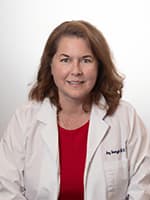
Amy Dereczyk
Associate Professor
313-378-0742
dereczal@udmercy.edu
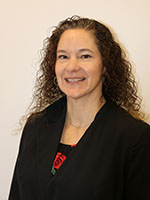
Rachel DeWitt
Associate Professor
313-993-1930
dewittrd@udmercy.edu

Yolonda Freeman-Hildreth
Associate Professor
313-993-3288
freemayf@udmercy.edu
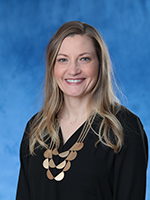
Kelli Frost
Assistant Professor
313-993-1674
battankl@udmercy.edu
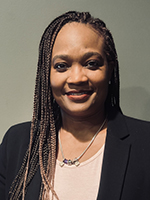
Cessalyn Harvey
Assistant Professor
313-993-1066
harveycy@udmercy.edu
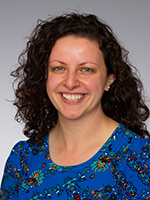
Nour Lyon
Assistant Professor
Clinical Coordinator
313-993-1515
lyonnr@udmercy.edu

Claire Nicholson
Assistant Professor
Clinical Coordinator
313-993-1773
nicholce@udmercy.edu
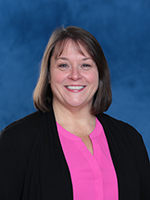
Marlene Shaw-Gallagher
Associate Professor
313-993-1517
gallagmm@udmercy.edu
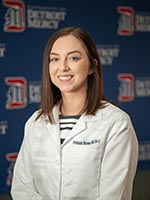
Jennifer Shivnen
Assistant Professor
Clinical Coordinator
shivnejs@udmercy.edu